Guide · Portfolios
How to make a modelling portfolio
A portfolio is not a photo album. It is a short, deliberate edit that tells a client what you look like, how you move and what you could be for their brand. Here is how I would build one in India today — starting from zero, without paying for a package.
Free forever · No joining or registration fees · No paid tiers · Women 18–34 · Not a jobs board
IN THIS GUIDE
- What a modelling portfolio actually is
- Digitals vs editorial — you need both, digitals first
- What shots to take — the starter list
- Building a portfolio with no experience
- The comp card, explained
- How much does a modelling portfolio cost in India?
- The free route: YKS Talents
- Mistakes that quietly sink a portfolio
I’m Yedukrishna Suresh. I photograph fashion, portraits and films under YKS Productions, and I run YKS Talents, a free portfolio platform where clients find talent. I’ve sat on both sides of the portfolio: shooting them, and looking through them to decide who to cast for my own shoots. This guide is what I wish every new face knew before spending a single rupee. यह गाइड हिंदी में पढ़ें →
01
What a modelling portfolio actually is
A modelling portfolio (often just called a “book”) is a small set of images that answers three questions for whoever is looking at it: what do you really look like, can you take direction, and what range can you cover? Everything in it should serve one of those three questions. Anything that doesn’t is noise.
Today most portfolios are viewed on a phone, in a few seconds, before anyone decides to look closer. That changes the priorities. A tight edit of strong, clear images beats a long scroll of “good enough” ones every time. Clients are not counting photos; they are looking for a reason to say yes, and a single weak or misleading frame can be the reason they don’t.
A complete portfolio usually has three parts:
- Digitals (also called polaroids) — plain, unretouched photos that show you as you are today.
- A small edit of styled images — portraits, editorial or commercial frames that show expression, movement and range.
- Your details — accurate measurements, height, city, and the kind of work you are open to. On paper this becomes a comp card.
02
Digitals vs editorial — you need both, digitals first
New models almost always get this backwards. They start with an expensive, heavily styled shoot and never take clean digitals. Clients and casting teams usually ask for digitals first, because digitals are the truth: no heavy makeup, no retouching, no dramatic lighting. They are how someone checks that you look like your photos.
Digitals (polaroids)
Simple, natural-light images against a plain wall: a front headshot, both profiles, a three-quarter angle, a smile and a neutral face, a waist-up shot and a full-length shot. Fitted, plain clothing, hair off the face, minimal or no makeup. They can be shot on a phone, and they should be updated whenever your hair, weight or look changes. I’ve written a full walkthrough in what to wear for model digitals, poses and phone setup.
Editorial and commercial images
This is where personality comes in. Editorial images tell a story or carry a mood — the kind of frame you’d see in a fashion story. Commercial images sell something: they are warm, approachable, believable, the kind of face that sits next to a product. Most working portfolios in India lean commercial, because that’s where most briefs sit — ethnic wear, jewellery, beauty, lifestyle and e-commerce. If you can show both, do; if you can only show one, show the one that matches the clients you actually want.
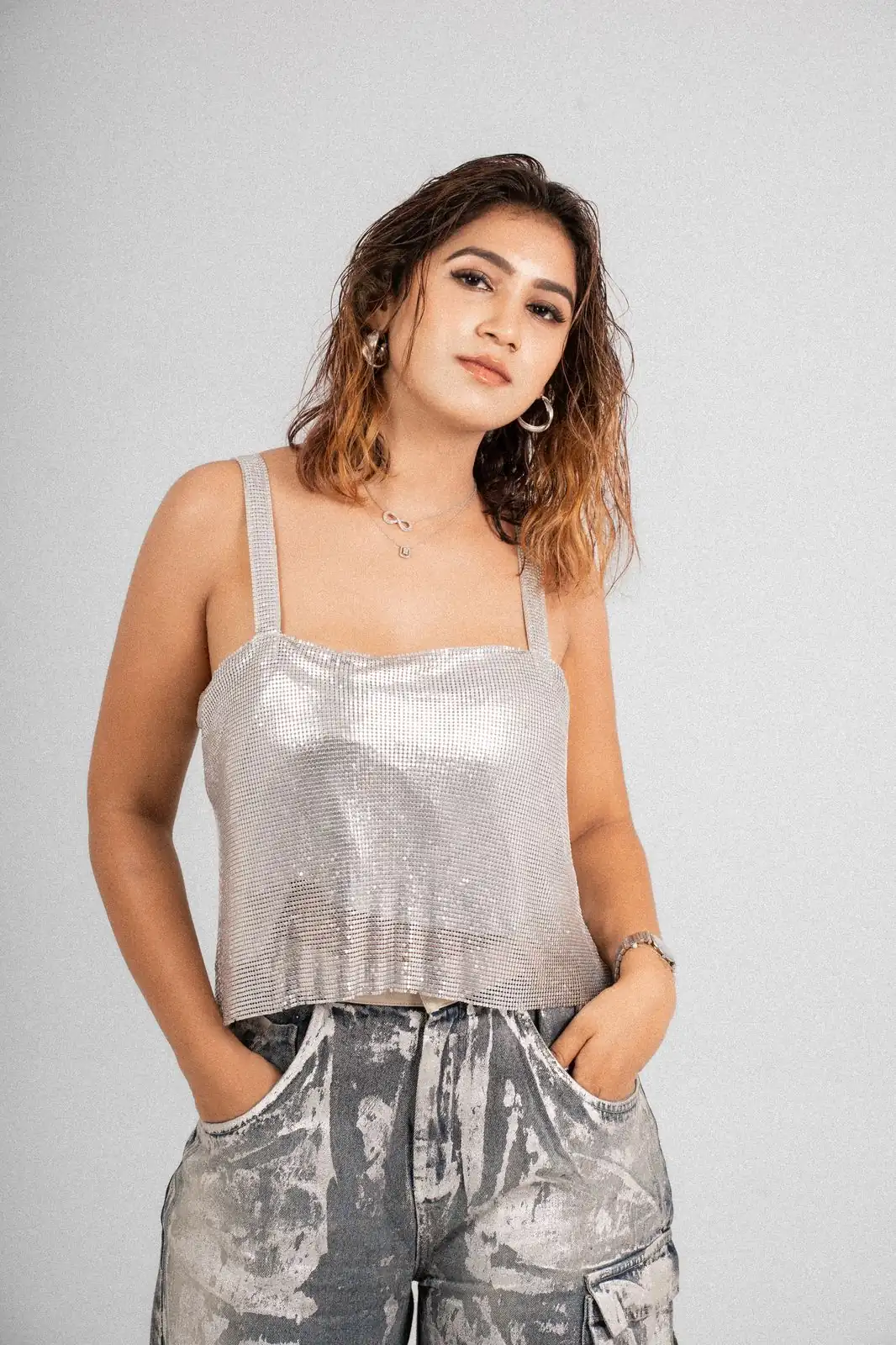
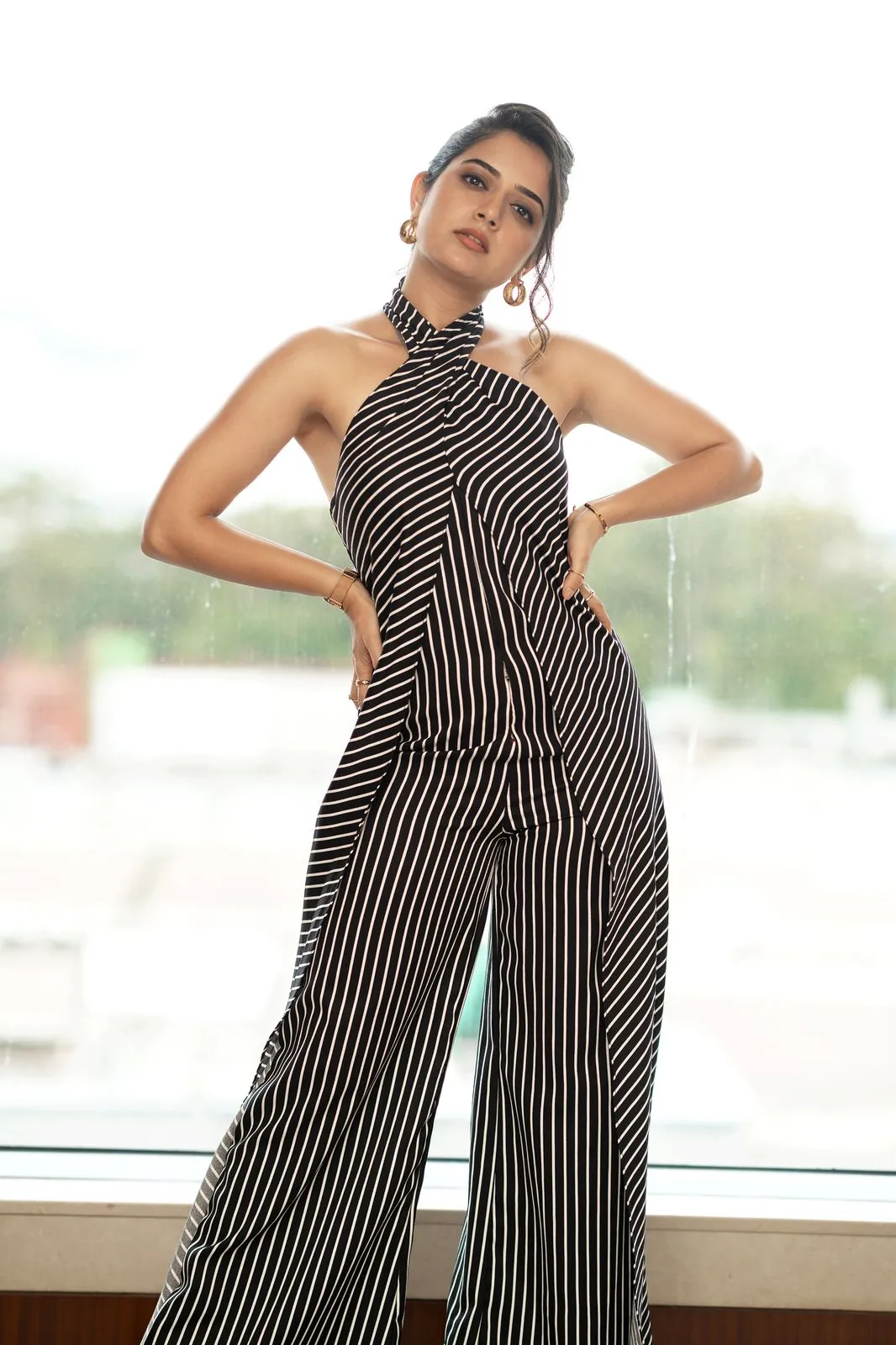
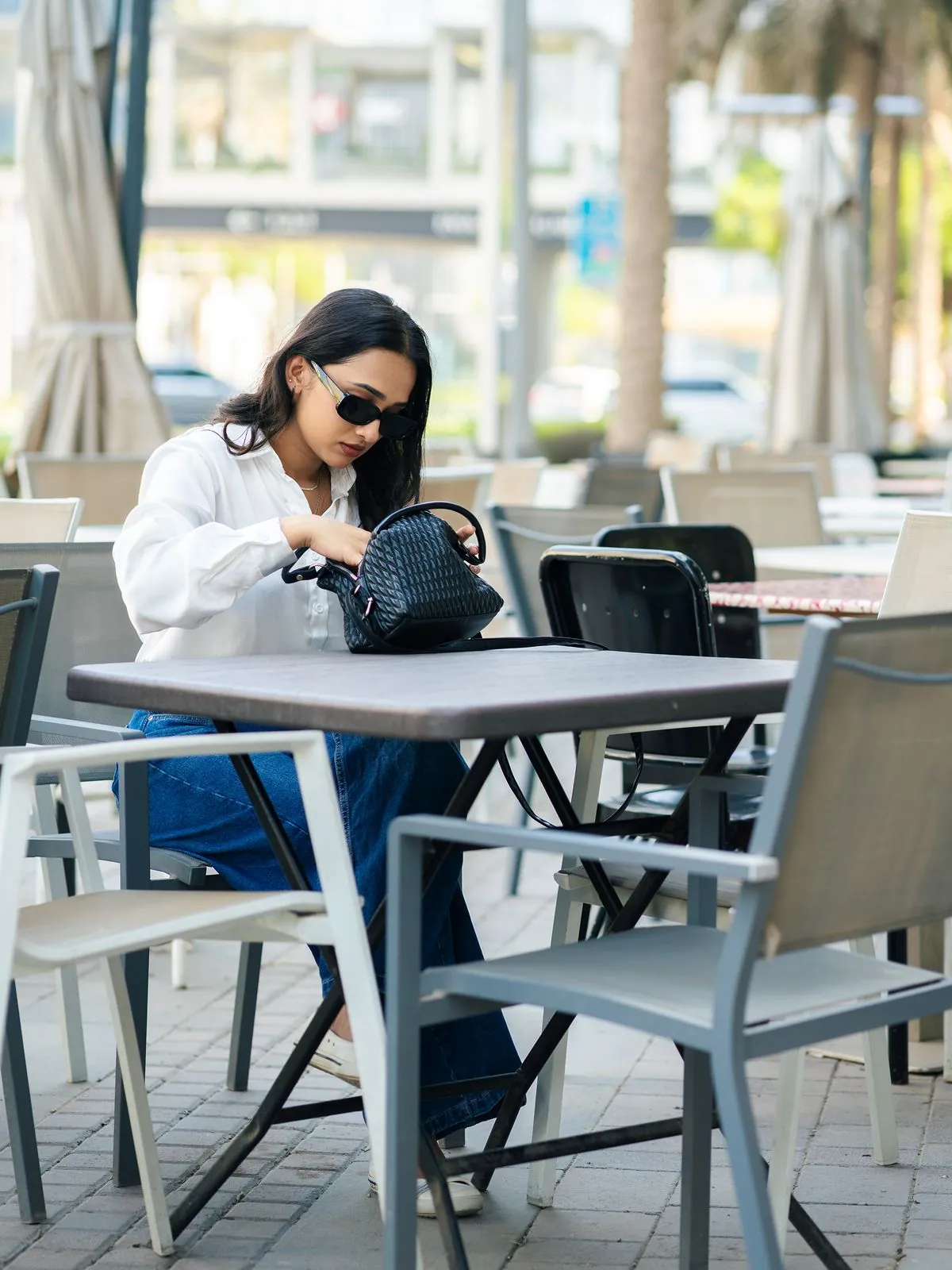
These three frames are from my own released fashion work. Notice how each one answers a different question: the editorial frame shows expression and how styling reads on camera, the full-length shows proportion and posture, and the café frame shows that the person can look natural and relaxed in a real setting. A good portfolio edit covers all three.
03
What shots to take — the starter list
If you are building a modelling portfolio with no experience, you don’t need forty images. You need a small set of the right ones. This is the list I recommend:
- A clean headshot — face to the camera, natural expression, soft light. This is often the very first image anyone sees.
- A smiling headshot and a serious one — clients want to know you can do both.
- Profile and three-quarter angles — they show your bone structure honestly.
- A full-length image — standing, relaxed, in fitted clothing. Height and proportion matter for fashion and e-commerce.
- A waist-up or mid shot — the most common crop in beauty and lifestyle campaigns.
- One movement or candid frame — walking, turning, laughing. It proves you aren’t stiff.
- One look that matches your target market — for many women in India that’s an ethnic or festive look; for others it’s clean western wear or beauty.
- Your digitals — always, kept separate and clearly labelled.
Six to twelve strong styled images plus a current set of digitals is a good, honest starting book. Add images only when they show something the book doesn’t already show.
04
Building a portfolio with no experience
Everyone starts with no experience. Here is the order I would do it in:
- Shoot your digitals at home this week. A plain wall, daylight from a window, a friend holding the phone. This costs nothing and is often the most useful thing you’ll ever send.
- Practise in front of a mirror and a camera. Learn your angles, how your face reads in a soft smile versus a neutral look, where your hands go. Ten minutes a day is enough.
- Choose your direction. Commercial, fashion, beauty, ethnic and bridal, fitness, lifestyle. You can do several, but your first edit should look like it belongs to one person with a clear identity.
- Get a small number of styled images. A collaborative shoot with a photographer who is also building their work, a shoot with a friend who knows light, or a properly briefed paid session — all are valid. What matters is the result, not the label.
- Edit ruthlessly. Show your shortlist to someone honest. Remove anything where you look unlike yourself, over-filtered or uncomfortable.
- Put it somewhere clients can actually find it. A camera roll isn’t a portfolio. Instagram helps, but a curated profile on a platform built for discovery does a different job.
A note on safety: if a “test shoot” comes with pressure — to pay up front, to shoot alone at an unknown location, or to do lingerie or implied nudity you didn’t agree to — walk away. I’ve written a separate guide on modelling agency fees and scams in India.
05
The comp card, explained
A comp card (composite card, sometimes called a Z-card or zed card) is a one-sheet summary of you: usually a strong headshot on the front, and three or four images showing range on the back, with your name, measurements, height, hair and eye colour, and contact route. It has traditionally been printed, commonly at around A5 size, and handed out at castings.
In India today most comp cards are shared as a PDF or an image on WhatsApp or email rather than printed. The rules are the same either way:
- Use your best headshot on the front. Nothing busy.
- On the back, show range: full-length, a commercial smile, one fashion or editorial frame, one look that suits your market.
- Measurements must be accurate and current. Being caught out at a fitting is far worse than a number you think is “not ideal”.
- Keep personal details off it. A city is fine; your home address and personal phone number are not necessary.
You can make one free, in your browser, with the YKS Talents comp card maker — your photos are never uploaded. The same page covers sizes, stats and layout in detail.
06
How much does a modelling portfolio cost in India?
Honestly: it can cost nothing, or it can cost a lot, and the price is not a reliable measure of quality. I’m not going to quote you a rate card, because prices vary enormously by city, photographer, and what is included. As a rough, approximate picture of how it typically breaks down:
- Digitals: free — a phone, a window and a plain wall.
- Collaborative (unpaid) shoots: typically free for both sides, with the images shared for both portfolios. Agree usage in writing first.
- A paid portfolio shoot with a professional photographer: typically priced by the hour or by the number of looks, with hair, makeup and styling often charged separately. Quotes can range widely, from modest studio sessions to multi-look productions.
- “Portfolio packages” sold as a condition of joining an agency: this is the one to be most careful about. See below.
If you do pay for a shoot, pay a photographer for a clearly defined result — a number of edited images, the looks, who owns what, and the delivery date — and never because someone told you it’s required to be “registered” or “considered”.
07
The free route: YKS Talents
I built YKS Talents because the most common story I heard from new faces was the same: pay a fee to register, pay for a compulsory shoot, then hear nothing. It shouldn’t work that way.
YKS Talents is a free, curated portfolio platform for women aged 18 to 34, across India and the Middle East. You create a free modelling portfolio; clients — brands, photographers, stylists and productions — browse the platform to find talent. It is free forever: no joining fee, no registration fee, no paid tiers, no “premium” upgrade. I also cast my own YKS shoots from it.
To be clear about what it is not: YKS Talents is not a jobs board and not an agency, and I don’t promise anyone work. It’s a place to be seen properly. Every application is read by me personally.
08
Mistakes that quietly sink a portfolio
- Heavy filters and beauty apps. If you don’t look like your photos in person, the portfolio has done its job badly.
- Too many images. Twelve great frames beat forty mixed ones. Every weak image dilutes the strong ones.
- All one look. Ten versions of the same pose, outfit and expression show no range.
- Old images. If your hair or look has changed, update the digitals and the lead image.
- Group photos, crops from events, mirror selfies. They tell a client nothing useful.
- Wrong measurements. Always current, always honest.
- Paying to be “registered”. A fee to join is not an investment in your career. Read the fees and scams guide before you pay anyone anything.
- Not reading the usage terms. Know who can use your images, where, and for how long — even on a free shoot.
Questions, answered straight
How do I make a modelling portfolio with no experience?
Start with free digitals shot at home in daylight against a plain wall, practise your angles, choose a clear direction (commercial, fashion, beauty or ethnic), then add a small number of styled images from a collaborative or clearly-briefed shoot. Edit hard and put it somewhere clients can find it — for example a free YKS Talents portfolio.
How many photos should a modelling portfolio have?
For a new model, roughly six to twelve strong styled images plus a current set of digitals is a good, honest starting point. Add images only when they show something new.
Can I make a modelling portfolio for free?
Yes. Digitals cost nothing, collaborative shoots are usually free for both sides, and YKS Talents lets women aged 18 to 34 create a modelling portfolio free forever — no joining fee, no registration fee and no paid tiers.
Do I need a professional photoshoot to start modelling?
Not to start. Clean digitals are often the first thing clients ask for. Styled professional images help show range, but they don’t need to come from an expensive package.
What should I wear for a portfolio shoot?
For digitals: fitted, plain clothing in solid colours and minimal makeup. For styled images, bring looks that match the work you want — ethnic, western, beauty or lifestyle — and keep them simple enough that you stay the focus. More detail is in the model digitals guide.
Is YKS Talents a modelling agency or a job site?
Neither. YKS Talents is a free portfolio platform where clients find talent. It doesn’t offer jobs, doesn’t charge fees and isn’t an agency. I also cast my own YKS shoots from it.
Keep reading
More from YKS Talents
YKS Talents
A considered portfolio, free
Women 18–34 across India and the Middle East. No joining fee, no registration fee, no paid tiers — ever. YKS Talents is a platform where clients find talent; it doesn’t offer jobs.